
Mantras are an ancient practice in yoga that uses sound as a tool for presence. Through conscious repetition, they help focus the mind, regulate the breath, and sustain an intention. It's not about believing, but about experiencing how sound organizes, accompanies, and deepens the practice.
The word mantra comes from Sanskrit: man (mind) and tra (tool, liberation). A mantra is, literally, a tool for the liberation of the mind.
It is recited, sung, or listened to attentively. Unlike an affirmation, a mantra does not seek to convince or explain. Its power lies in the sound, rhythm, and repetition, which generate a direct effect on the nervous system and mental state.
💛 Stay until the end: we've created a little gift for you about mantras!

Origin and history of mantras
Mantras originated in ancient India over three thousand years ago, within the Vedic tradition. They first appear in the Vedas , sacred texts transmitted orally, where sound was not only a means of expression but also a living force .
In these traditions, the universe is born from sound. Therefore, reciting a mantra was not simply repeating words, but rather attuning oneself to a specific vibration . Mantras were used as a way to quiet the mind, transcend inner noise, and access clearer and more expansive states of consciousness.
Over time, mantras became integrated into yoga and meditation as a simple and profound tool to return to the center, connect with the breath, and inhabit inner silence.
It's not magic, but... physical vibration.
A mantra works not only because of its meaning, but also because of how it sounds and how it is repeated . The sound generates a vibratory pattern that the body perceives even before the mind interprets it.
Furthermore, many Sanskrit syllables were designed to resonate in specific areas of the body: the chest, the throat, the skull. Over time, this repetition trains the mind to remain present, even when the sound stops: less mental stimulation, more bodily presence.
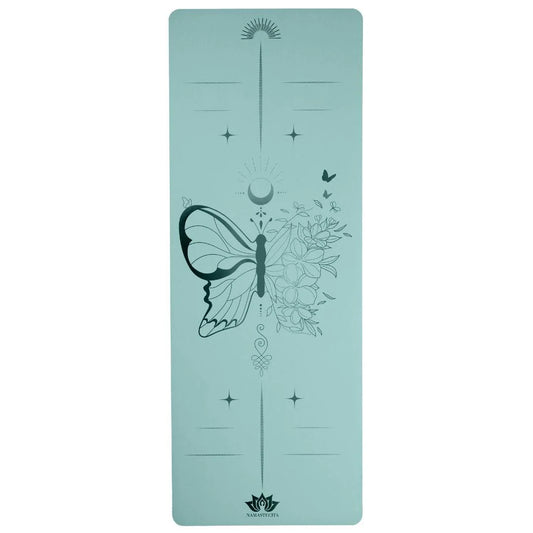
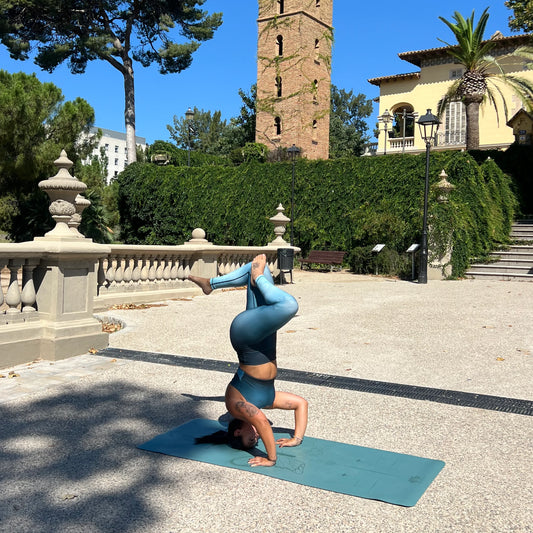
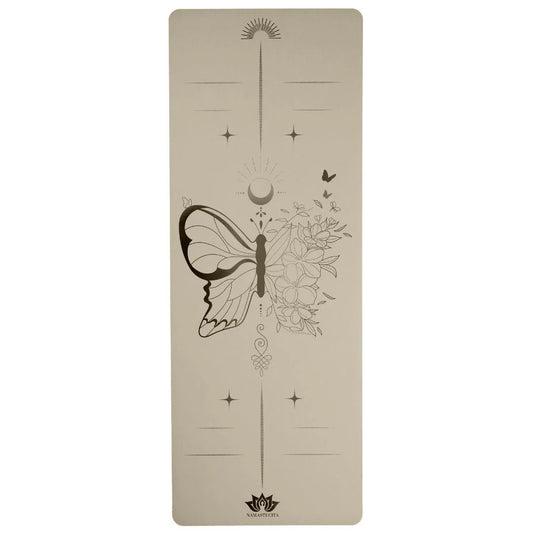
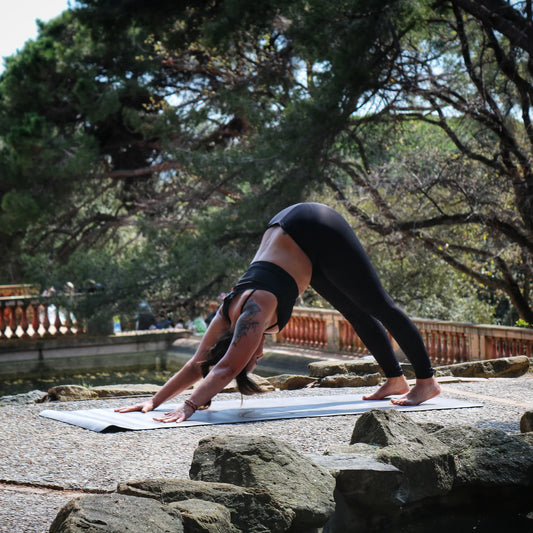
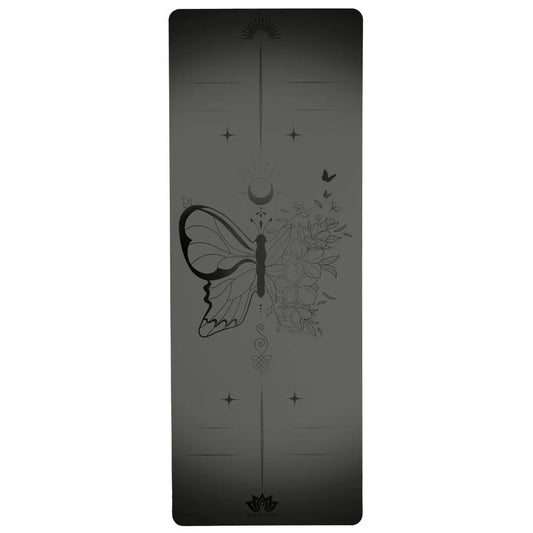
Click on the image and discover this fascinating Namastecita mat with an exclusive design! 👇✨

How to use mantras (in practice and in everyday life)
Mantras are not reserved for “special” moments. They work best when integrated simply and consistently.
-
Before practice
Repeating a mantra at the beginning helps to establish a threshold: stepping out of the external world and onto the yoga mat. It doesn't aim for perfect concentration, but rather mindfulness.
-
During practice
The mantra accompanies the breathing and movement, serves as an anchor when the mind wanders, and generates an internal rhythm in dynamic or still postures. -
In conscious breathing
It is used to guide the respiratory flow, lengthening the exhalation and keeping attention on the breath. -
In meditation
It replaces mental dialogue. Every time the mind wanders, it returns to the sound, cultivating presence and stability. -
Off the yoga mat
It can accompany mindful walks, moments of pause, or stressful situations. It functions as a sonic support that helps you return to the present moment.
MANTRAS TO ACCOMPANY YOUR YOGA PRACTICE
Now then! If you've found this topic interesting, we've created a little book of mantras especially for our Namastecita community, made with lots of love to accompany your practice and help you vibrate at a higher frequency. inside and outside the mat.
CLICK HERE and start with what you can today! Every little step adds up 🧡 🌿
How to print your mantra booklet 🧘✨
To get the booklet organized and ready to use, follow these simple steps:
- Download the file.
- Print on A4 size.
- Select double-sided printing .
- Choose the option to flip on the short side (if it appears on your printer).
- Once printed, fold all the sheets in half .
- Staple in the center (2 staples is ideal).
And that's it 🌼
Your booklet will be in A5 format, with the mantras in the correct order, one on each side of each page.
💡 Namaste Tip:
If you prefer not to staple, you can also use a string, a ribbon, or simply leave it folded and loose to take it to your practice.
Thanks for reading!
Namaste! 🧘
1 comment
Mil gracias. Me encanta, está genial